My teenager took the car and went silent for four hours
Four hours, twenty missed calls, one read receipt. The car is out there somewhere and so is your child.
A teenager who goes silent is most often safe, distracted, or asleep somewhere with a flat battery, so check shared location and call their friends before escalating. Within ten minutes you can usually answer the two questions that matter: where the phone last reported, and where the car is parked. Escalate to police when the facts, not the fear, justify it.
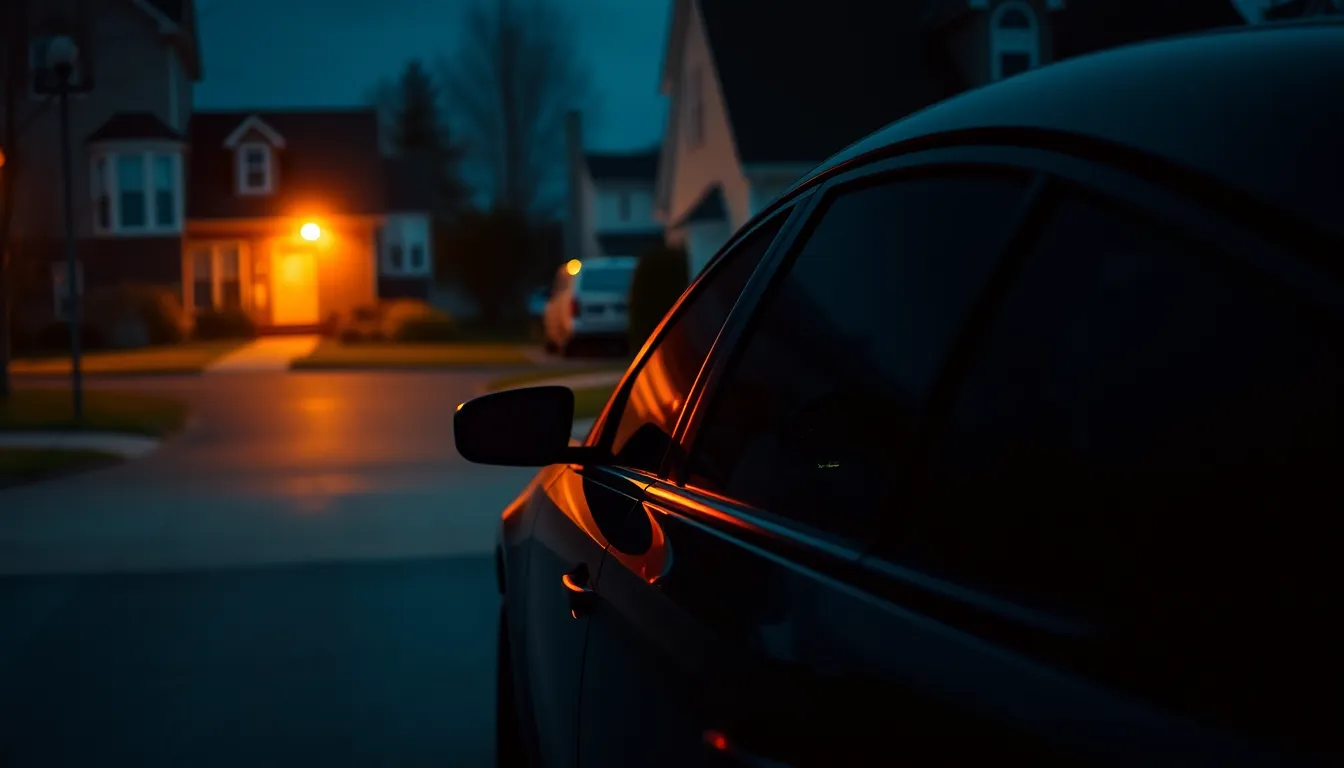
It started normally. Keys, a wave, a “back by eight” from the doorway. Now it is past midnight, the phone goes to voicemail or rings out, and the last message you sent shows a read receipt from three hours ago with nothing after it. The car is out there. So is your child, and your imagination has already written four versions of this night, none of them calm.
Worry is appropriate. What you do with it in the next hour decides whether this ends as an embarrassing conversation over breakfast or a genuinely bad night. The structure below is built around one fact that experienced parents and police officers both know: silence is usually logistics, not tragedy.
The silence spiral
Understand what your brain is doing, because it will try to drive the next hour. A read receipt with no reply reads as rejection. An unanswered call reads as avoidance, then as danger. Each unanswered minute tightens the loop, and the loop pushes toward dramatic action: driving to search streets at random, posting publicly, calling the police with fear instead of facts.
The antidote is boring: a checklist, run in order, with the decision to escalate based on facts gathered rather than feelings generated. Teenagers go silent for unglamorous reasons at a high rate: a phone that died at 40 percent, a borrowed charger that did not work, falling asleep at a friend’s, a plan that changed twice, or a driver who parked and walked into a place with no signal. Start from the likely world, and let the evidence move you.
The 10 minute check
Do this from wherever you are, in parallel if two adults are available.
- Open every location channel that already exists. A family sharing app shows the last reported position with a timestamp; read the timestamp, because a dot from this afternoon is history, not location. Find My on iPhone shows a last known position even for a phone that is off or dead. The full locating procedure for Apple is in the Find My iPhone guide, and the Android side is in the Google Find My Device guide.
- Check the timeline and the parked car question. If your teenager uses Google Maps with timeline history enabled, the last entries on the timeline show where the phone stopped, which on a driving night is usually where the car is parked. A pin at a friend’s house answers half the night’s questions by itself. If nothing was ever shared, skip this; you cannot install history retroactively.
- Call once more, then text a concrete question. Not “where are you”, which reads as an accusation, but “call me when you see this, I am worried, no consequences for being late”. One message, no barrage. Twenty missed calls in an hour teach a teenager to silence the phone; one clear message gives them a way back.
- Call the friends. This is the highest yield action on the list and gets its own section below.
- Check the practical signals. Is the car gone, or is the car in the driveway while the phone is missing? Is their charger where it should be? Did they take a jacket that matches tonight’s weather? Each fact either raises or lowers the temperature, and you will want them if this escalates.
Call the friends first
Before any search, before any escalation: two or three calls to the friends who are always there. Ask directly and without accusation: have you seen him tonight, where did you last talk, do the group chats say anything. Teenage nights are documented in real time by people who are not their parents, and a friend’s screenshot of a plan that changed at ten is worth more than an hour of driving.
Two things make these calls work. First, tone: you are asking for help, not interrogating accomplices. Friends who feel accused close ranks; friends who feel trusted volunteer everything, including the detail that plans changed and everyone went to someone’s house. Second, follow through: if a friend says “he left for home at eleven”, that is a data point, not an answer, and it redirects your worry from where he is to what happened on the way.
Most of these nights end somewhere in this paragraph. The phone was in a coat. The friend drove. The battery died at a house with poor signal. Let the likely world have its turn before the catastrophic one.
When it is actually an emergency
Escalate to the police when facts stack, and do not wait out of politeness. There is no waiting period for reporting a missing person anywhere, and a parent’s judgment call is enough to start. Signals that justify the call now:
- The phone was reachable and has since switched off or disappeared from sharing entirely.
- The car or phone is reporting from somewhere impossible or dangerous: far outside the expected radius, a highway, water, an area you know is unsafe.
- A friend confirms your teen left for home hours ago and never arrived.
- Conditions are genuinely dangerous: severe weather, a driver who is inexperienced at night, or a teen who has never done this before.
- Anything in their life recently, an argument, a breakup, a bad exam, that makes “chose not to answer” less plausible.
When you call, be dense and factual: car model and plate, phone number, last confirmed contact time, last known location with timestamp, what has been ruled out, who has been spoken to. Ask for the report number. And if the story resolves mid search, which it often does, call back immediately and stand the search down; police remember families who close their loops.
After: agreements and sharing done right
The morning after is when this either becomes a system or becomes a fight. Do the system.
Write the driving agreement down. Short, mutual, and specific: destination and rough return time on every drive, a one line message if plans shift or the phone is dying, charger in the car, phone untouched while driving. In exchange: no hourly location checks, no reading of messages, and no punishment for honest lateness. The exchange is not soft parenting; it is the mechanism that makes honesty cheaper than silence, and silence is what you just spent a night fighting.
Set up sharing that both sides can see. Two way sharing beats one way watching: if the whole family shares, this is a family system rather than a spotlight on one person. Arrival and departure alerts on the places that matter, home and the usual friends’ houses, mean you get told when they get there instead of checking a map every ten minutes. The two way location sharing setup guide walks through it, and the arrival alerts guide covers the notification settings. For the real time mechanics on a phone you already share, the teenager location guide has the platform specifics.
Fix the battery failure mode. Half of teenage silence is a phone at 3 percent in a pocket with no charger. A cable in the car, a spare battery pack in the bag, and a rule that the phone leaves the house above 50 percent removes most of tonight’s scenario before it starts.
The trust balance
Here is the part that outlasts any single night. Location sharing is a tool with a shelf life, and what you do with it decides whether it survives into your teenager’s twenties. Checked hourly, it teaches evasion. Referenced only when it matters, a “saw you got there, good”, it becomes what it should be: a background safety net that nobody resents because nobody waves it around.
If you tracked more aggressively tonight than your agreement allowed, say so plainly in the morning and say why. Teenagers extend far more grace to parents who admit that fear drove the throttle than to parents who pretend a night of surveillance was normal. The goal is not a teenager who can never go silent. It is a teenager who knows that silence costs more than honesty, and a family where the honest version of “I am staying later” arrives by text before the worry ever starts.
Questions & answers