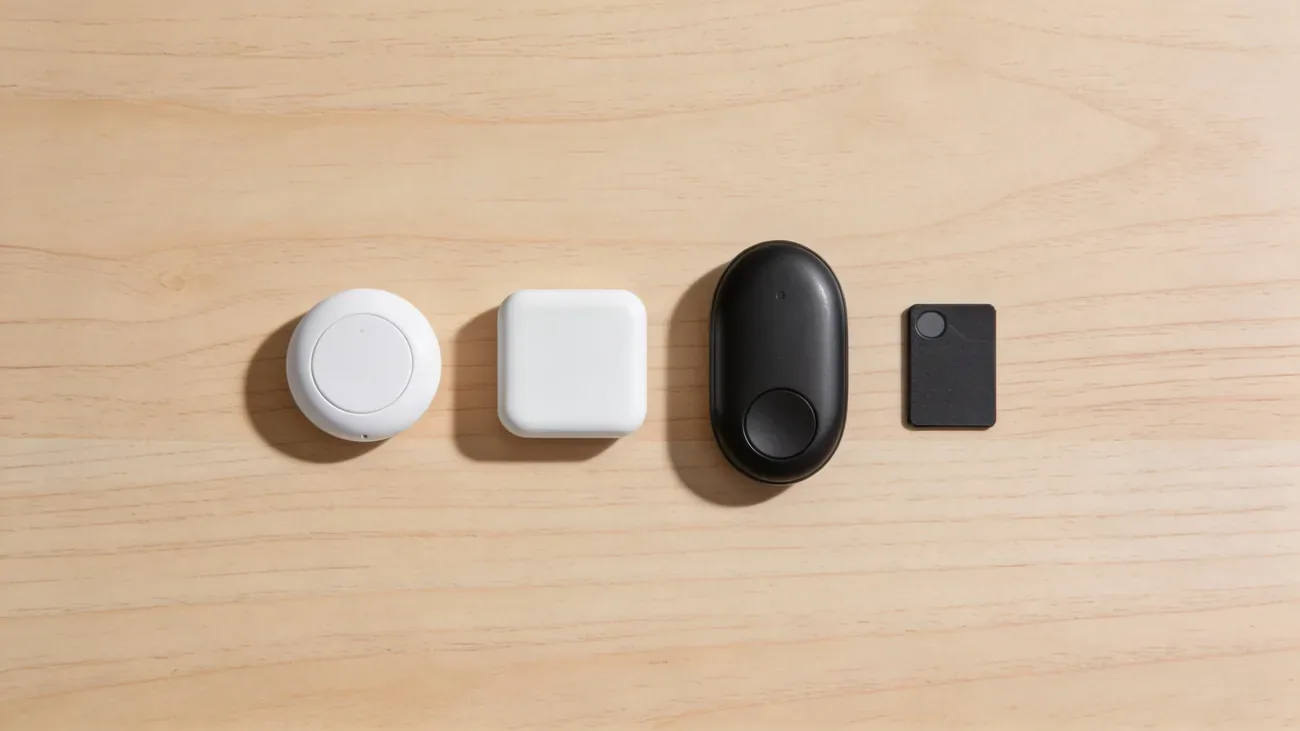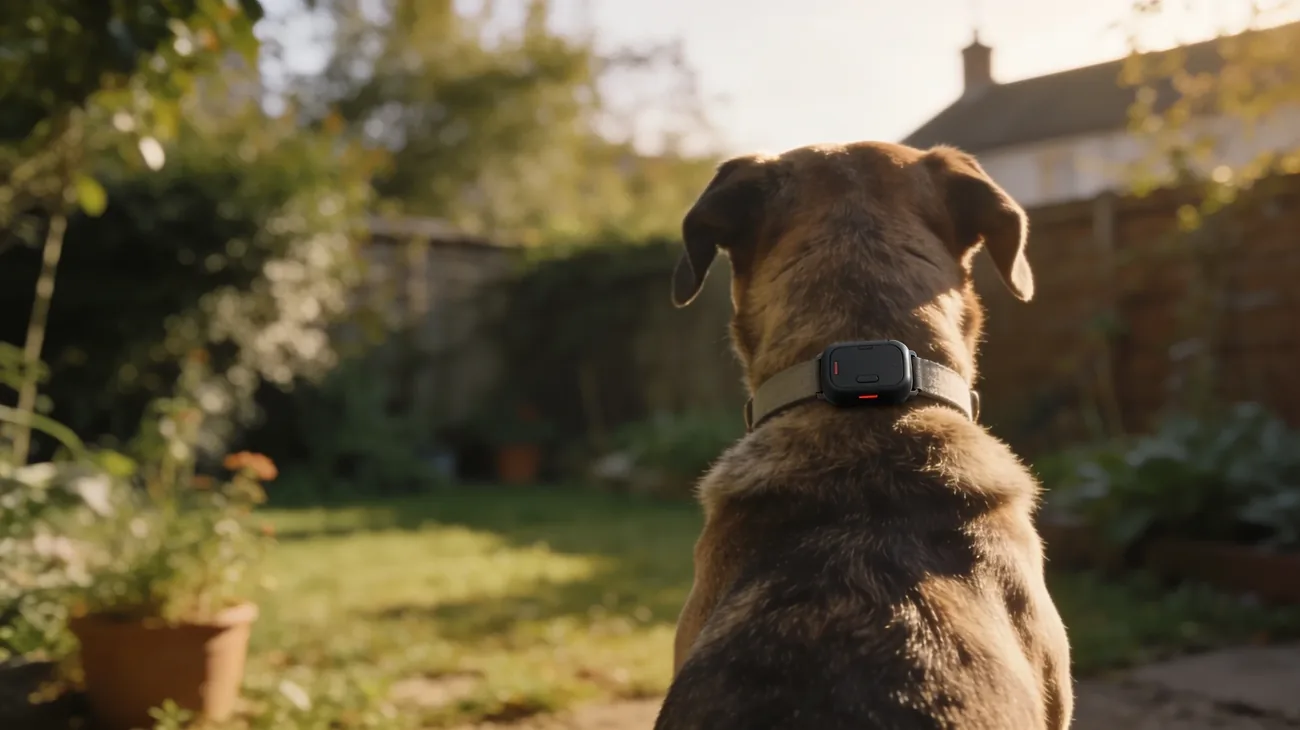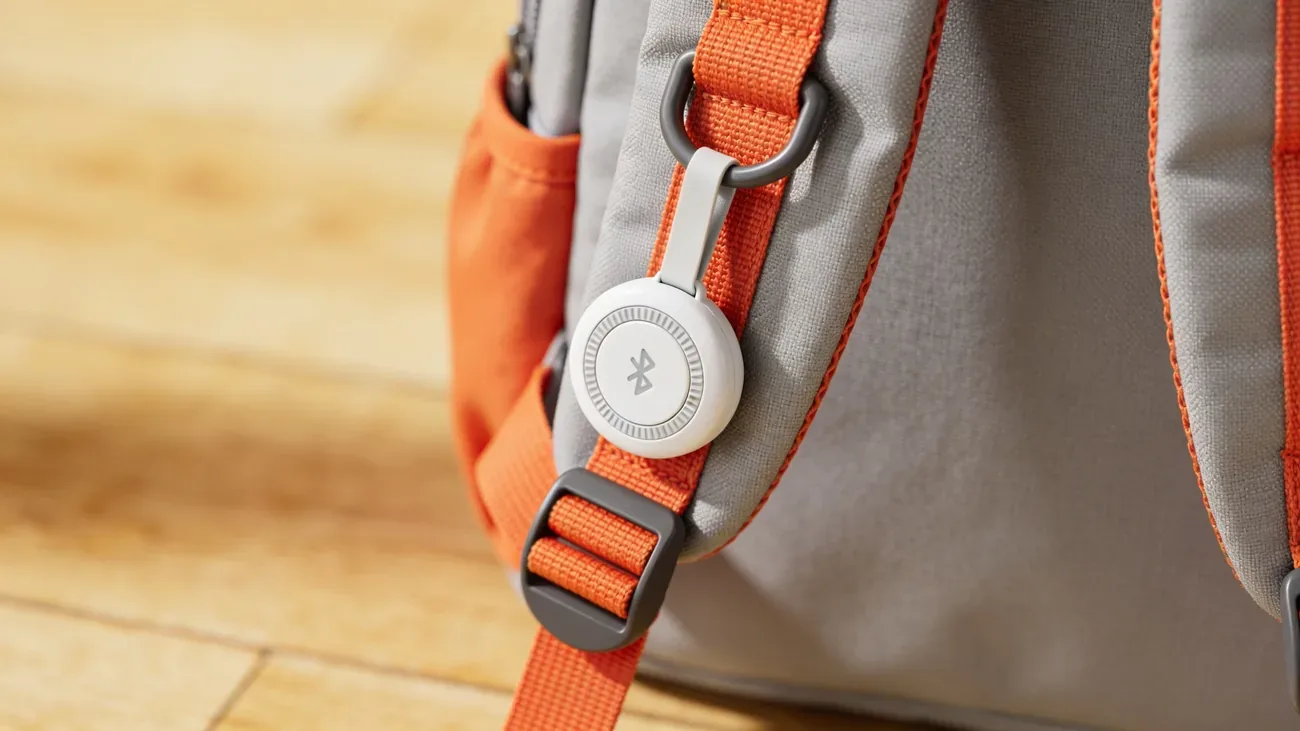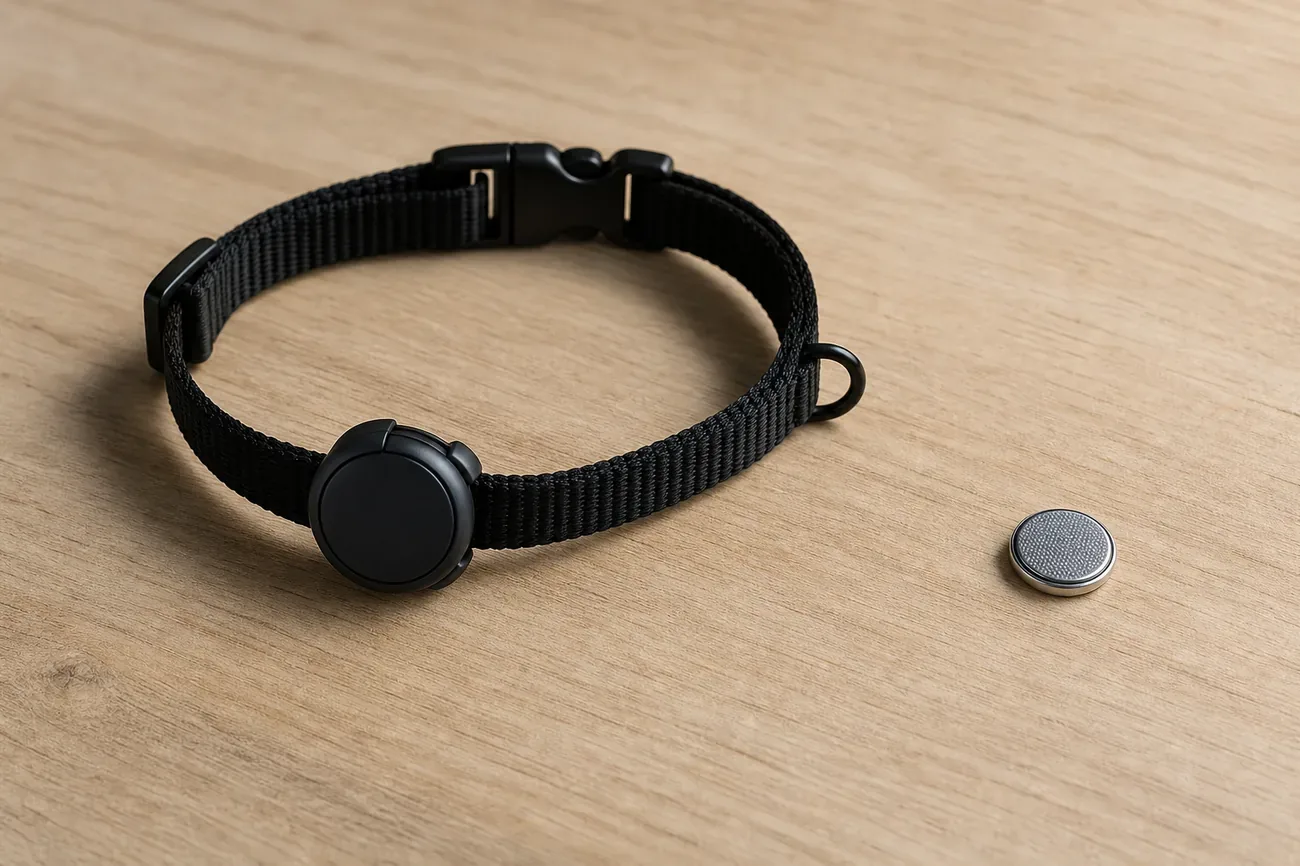
In brief: AirTag works on a cat collar, but lighter options fit better: Tile Sticker for the smallest cats, Chipolo ONE Spot for iPhone homes, and Tabcat for yard cats. For a true outdoor roamer, skip Bluetooth entirely and get a cellular GPS tracker.
Table of contents
The default advice for tracking a cat is “just use an AirTag.” It is cheap, the battery lasts about a year, and the Find My network covers most populated areas. But a cat’s neck is not a keychain. At 11 grams with a loud speaker and a coin battery inside, the AirTag is heavier, noisier, and riskier than the trackers designed around small animals.
For Bluetooth tracking on a cat collar, three options fit better: Tile Sticker for the smallest cats, Chipolo ONE Spot for iPhone households, and Tabcat for yard cats. And for a true outdoor roamer, the honest answer is that no Bluetooth tag is enough. That job needs cellular GPS.
Why AirTag is a poor fit for cats
The case against AirTag on cats rests on four concrete problems, not brand preference.
Weight. Apple lists AirTag at 11 grams, and a holder adds several more. Veterinary guides often cite a rule of thumb that collar attachments should stay under about 5 percent of body weight. On an average adult cat that leaves a working budget of roughly 8 to 10 grams for the tracker alone, which puts the AirTag over the line. On a kitten or a small adult, it is not close.
Noise. The AirTag speaker is tuned to be heard across a room. A few inches from a cat’s ear, the find-mode beep is startling, and noise sensitivity in cats is common. A cat that bolts the first time you ping the tag has learned the wrong lesson, and some cats refuse the collar afterward.
Swallow risk. Collar holders fail under grooming, climbing, and squeezing through tight gaps. A freed AirTag is a smooth disc a curious cat can mouth or swallow, and the CR2032 cell inside can burn tissue if the case cracks. The battery is the part vets worry about, not the radio.
Breakaway interference. Cat collars must release under tension so the cat cannot strangle. Bulky holders can snag on furniture or fencing before the buckle releases, defeating the mechanism. Feline behaviorists warn that dangling devices are especially risky for cats because they squeeze through narrower gaps than dogs.
Apple’s own position rounds out the picture: the company states that AirTag is designed to track personal belongings, not people or pets. Our broader comparison of the four tracker platforms covers how the networks differ behind these trade-offs.
The weight budget, in practice
Collar, buckle, ID tag, and tracker all share one weight budget. Once you subtract the collar hardware, an average adult cat has room for roughly 8 to 10 grams of tracker. A kitten or small adult under about 6 pounds has room for roughly 5 grams.
That single constraint ranks the options before any feature comparison:
- 5 grams: disappears on the collar. The only comfortable tier for kittens and small breeds.
- 8 grams: fine for most adult cats on a light breakaway collar.
- 11 grams and up: borderline. Works on large indoor cats, questionable on everyone else.
- 25 grams and up: GPS collar territory. Justified only for genuine outdoor roamers, on adult cats big enough to carry it.
Four trackers that fit a cat collar
| Tracker | Weight | Battery | Network | Phone needed | Subscription |
|---|---|---|---|---|---|
| Tile Sticker | 5 g | Sealed, about 3 years | Tile app crowd | iPhone or Android | None |
| Chipolo ONE Spot | 8 g | CR2032, about 1 year, replaceable | Apple Find My | iPhone only | None |
| Tabcat v2 tag | About 5 g | Replaceable cells | RF handheld receiver | None, dedicated handset | None |
| Apple AirTag (reference) | 11 g | CR2032, about 1 year, replaceable | Apple Find My | iPhone to track | None |
Specs are manufacturer ratings: Tile lists the Sticker at 5 grams with IP67 sealing and up to 250 feet of direct Bluetooth range. Chipolo lists the ONE Spot at 8 grams with a year of life from a replaceable coin cell and about 200 feet of direct range. Tabcat’s homing tags weigh about 5 grams each, pair with a handheld directional receiver instead of a phone, and cover up to about 500 feet in open conditions with no subscription.
Tile Sticker: the lightest pick. At 5 grams with a sealed three-year battery, it is the tracker for kittens, small adults, seniors, and any cat that notices weight. It works in mixed iPhone and Android homes through the Tile app, and there is no coin cell to swallow if the tag ever separates. The cost is crowd density: the Tile relay network is smaller than Find My, so outdoor updates in sparse areas arrive less often.
Chipolo ONE Spot: the Apple-home pick. At 8 grams it is noticeably lighter than an AirTag while using the same Find My network, the same Lost Mode, and the same replaceable CR2032. The trade is ecosystem lock: setup and tracking need an iPhone, and Android members of the household cannot follow the cat. For an iPhone-only home with an adult cat, it is the most direct AirTag upgrade.
Tabcat v2: the yard-cat pick. Instead of a phone network, Tabcat uses radio homing: a handheld receiver with directional lights and audio that intensify as you near the tag. No phone, no app, no account, and one handset follows up to four cats. Range tops out around 500 feet in the open, so it suits cats that stay on home turf and slip over the fence, not cats that roam blocks.
Pebblebee Clip: the rechargeable alternative. Worth a mention for owners tired of coin cells: the Clip works with Find My, recharges over USB-C, and current models are rated up to about a year per charge. Confirm the exact model’s size before buying for a small cat, since the line has changed across generations.
Tile and Chipolo also sidestep a worry some owners raise about AirTag’s speaker: every tag in this list can play a sound, so test the volume at arm’s length first and watch whether your cat startles before relying on the ping.
Indoor cat: cheap and light is fine
If your cat lives inside, the threat model is a hiding spot, not a neighborhood search. A cat behind the washing machine or inside a closet is within direct Bluetooth range, so any of the three picks works and crowd networks never enter the picture.
Buy on weight and household phones: Tile Sticker for the smallest cats or mixed iPhone-Android homes, Chipolo ONE Spot for iPhone-only homes that want Find My coverage as a bonus. Either costs less than a single vet visit and needs no subscription. For background on how the relay behaves when the cat does slip out, see whether AirTag works without an iPhone nearby; the same density logic applies to every crowd network.
Outdoor cat: Bluetooth is not enough
A Bluetooth tag on a roaming cat reports a position only when a compatible phone walks within range. In a dense block that happens constantly. In a suburb at 3 a.m., with the cat two streets over, there is no phone in range and no update. The map shows a stale pin while the cat keeps moving.
For a true outdoor cat, the answer is a cellular GPS tracker with its own SIM: Tractive’s cat tracker, for example, weighs about 1.1 oz including its integrated safety-release collar, is rated for adult cats, runs up to about a week per charge with power-saving zones, and uploads live positions over the mobile network in 175-plus countries. The costs are real: collar weight a small cat will notice, weekly charging, and a subscription that pays for the data connection. But it is the only category that tracks a roaming cat in real time without depending on strangers’ phones.
One caution carries over from every tracker discussion: no collar tag replaces a microchip. Chips are permanent, battery-free ID that any vet or shelter can scan, and the logic in our microchip vs tracker guide applies to cats exactly the same way. For the separate question of trackers used on people rather than pets, our piece on AirTag for tracking people covers the misuse risks and the warning signs.
The collar matters more than the tracker
Whatever tag you choose, the collar around it is the bigger safety decision. A breakaway buckle is non-negotiable for any cat that goes outside: it must release under tension, and the tracker mount must not snag before the buckle gives way. Fit stays snug at two fingers between collar and neck so the tag cannot rotate under the chin where the cat can chew it.
If the cat is new to collars, stage the introduction: empty collar first for about a week, then add the tag. A cat that accepts the collar keeps the tracker; a cat that fights it will lose both in a bush. Check fit weekly, because weight changes and fur matting quietly loosen collars over time.
The short decision
Tile Sticker for kittens and small cats, Chipolo ONE Spot for adult cats in iPhone homes, Tabcat for yard cats you find with a handset instead of a phone. AirTag only as a hand-me-down for a large indoor cat that tolerates the weight. And for a genuine outdoor roamer, skip Bluetooth and pay for GPS: stale pins are theater, live positions are the product.
Frequently asked questions
Is AirTag safe to put on a cat collar?
Mostly yes for a large indoor cat, no as a general recommendation. Apple states AirTag is designed for belongings, not pets. At 11 grams plus a holder it sits near the weight limit for small cats, the find-mode sound can stress noise-sensitive animals, and a tag that breaks loose becomes a swallow hazard because of its coin battery. Vets consistently recommend a microchip as the primary ID and treat any collar tracker as a secondary layer on a proper breakaway collar.
What is the lightest tracker for a cat collar?
Tile Sticker, at 5 grams with a sealed battery rated for about three years. It is roughly half the weight of an AirTag, needs no charging, and works with both iPhone and Android through the Tile app. The trade is network density: Tile relays positions through phones running the Tile app, a smaller crowd than Apple's Find My network. For an indoor cat that hides in closets, that trade rarely matters.
Will a Bluetooth tracker find an outdoor cat?
Not reliably. Bluetooth trackers report direct range of a few hundred feet at most, and crowd-relayed updates need a compatible phone to walk within range of your cat. In a dense city block that happens often. In a suburb at night, when a roaming cat is most likely to be out, it may not happen for hours. For a cat that genuinely roams, a cellular GPS tracker with its own SIM and live updates is the right tool despite the weight and subscription.
How much weight can a cat carry on its collar?
Less than most people assume. Veterinary guides often cite a rule of thumb that collar attachments should stay under about 5 percent of body weight, and the collar, buckle, and ID tag all count toward that budget. In practice that leaves roughly 8 to 10 grams for the tracker on an average adult cat, and 5 grams or less for a kitten or small adult. That budget is why AirTag at 11 grams is borderline and 5-gram tags are the comfortable pick.
Do cat trackers need a subscription?
No for Bluetooth and RF trackers, yes for cellular GPS. Tile, Chipolo, Pebblebee, and Tabcat all work with a one-time purchase and no monthly fee. GPS trackers like Tractive carry a built-in SIM card that uploads live positions over the mobile network, and that data connection is what the subscription pays for. Judge the fee against the job: indoor hiding spot versus outdoor roamer.
What happens if the breakaway collar comes off with the tracker?
You lose the tracker and keep the cat, which is the correct trade. Breakaway buckles are designed to release under tension so the cat cannot strangle, so a lost collar usually means the mechanism worked. The app will show the tracker sitting still at one spot, often along the cat's daily path: a fence, a bush, or a hiding corner. Recover the collar, fit a fresh breakaway, and keep the microchip current, since it is the only ID a cat cannot remove.