What matters here: AirTag is for iPhone owners and Pixel Tag is for Android owners, and that compatibility line decides before any spec. Both cost $29 with a replaceable CR2032 battery and UWB precision finding, but Pixel Tag goes on sale November 11, 2026, so its real-world behavior is still untested.
Table of contents
AirTag and Google Pixel Tag look like direct rivals. Both cost $29, run on a replaceable CR2032 battery, carry an IP67 rating, and lean on a large crowdsourced finder network. The real decision arrives before you compare a single spec: which phone will own the tracker?
An AirTag is for an iPhone or iPad owner. A Pixel Tag is for an Android owner. Apple locks normal AirTag setup to its own devices, while Pixel Tag is designed for Android 9 and later through Google Find Hub. Neither tracker is a practical workaround for the other ecosystem.
One more difference matters right now. Pixel Tag was announced on August 12, 2026 and goes on sale November 11, 2026, according to TechCrunch. This is therefore a specification comparison, not a retail test. Google’s published details look strong, but network behavior, accessory availability, and battery experience need checking once the tag is in real bags and keyrings. Our AirTag review shows what a mature tracker looks like after years on sale.
The short answer
| If this is your phone | Better tracker | Why |
|---|---|---|
| iPhone or iPad | AirTag | Native Find My setup and Apple’s finder network |
| Pixel, Motorola, or another Android phone | Pixel Tag | Native Google Find Hub setup and Android compatibility |
| Samsung Galaxy | Pixel Tag or SmartTag2 | Pixel Tag works with Android; SmartTag2 adds Samsung-only features |
| Mixed household | Buy for the person who owns the item | Each tracker lives in a separate app and account |
Do not choose on network marketing alone. An AirTag in a household with no iPhone is useless as an owned tracker, however large Find My may be. The same goes for a Pixel Tag in an iPhone-only home. Compatibility is the first spec, not a footnote.
Price, battery, and physical design
Google matches Apple’s US pricing exactly: $29 for one tag and $99 for a four-pack. Both use a user-replaceable CR2032 coin battery, and neither needs a subscription for basic finding. Apple rates the current AirTag for more than a year, and Google rates Pixel Tag at over a year.
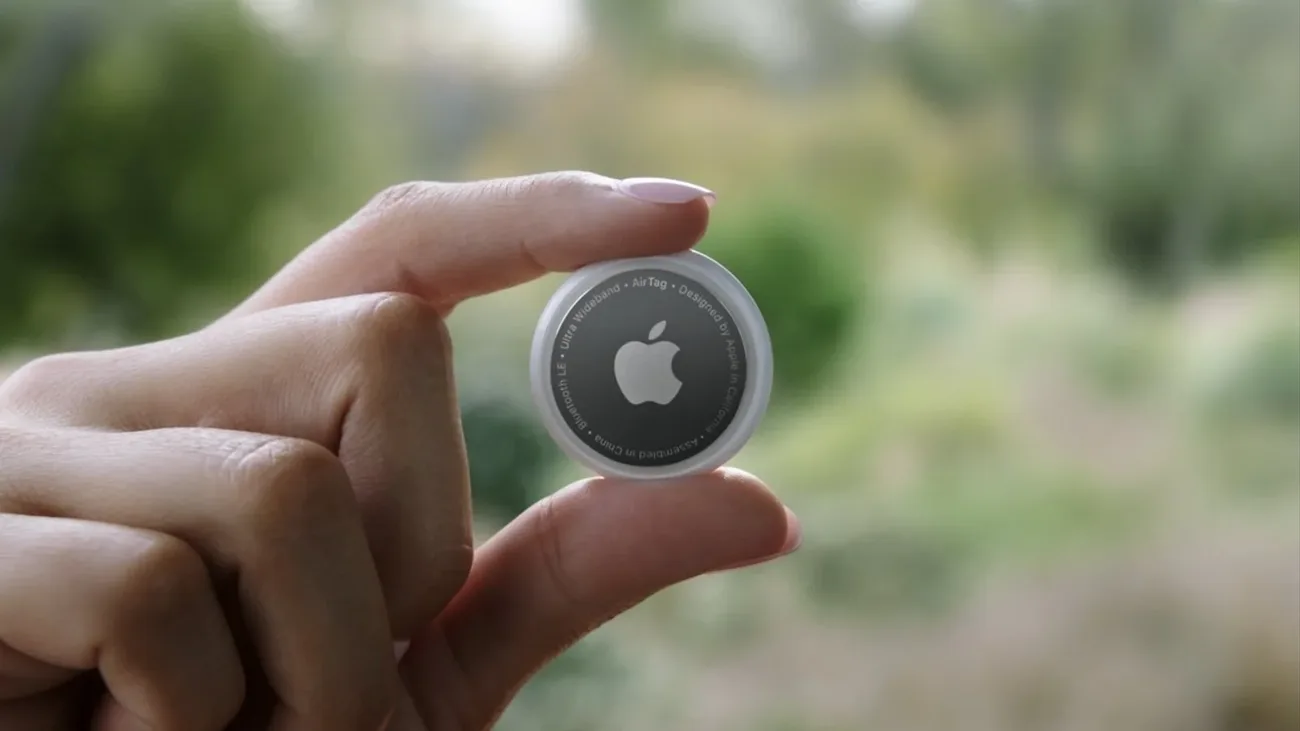
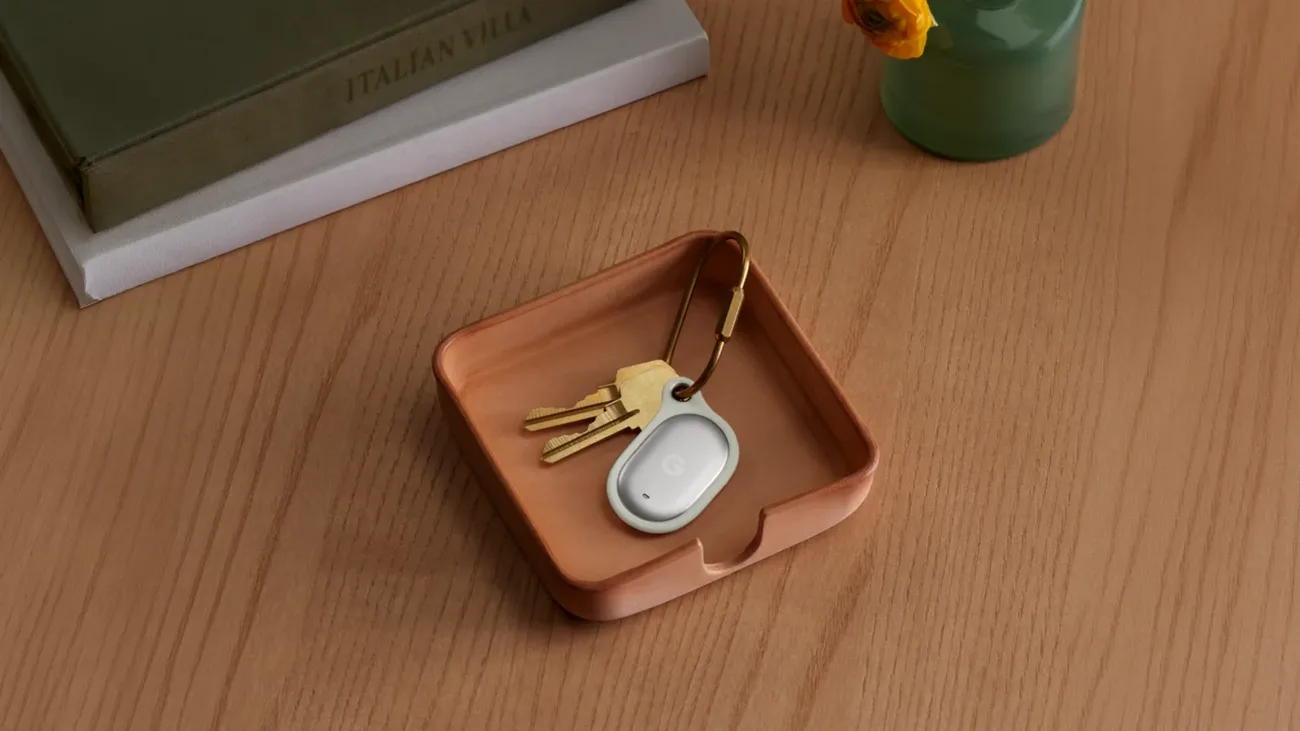
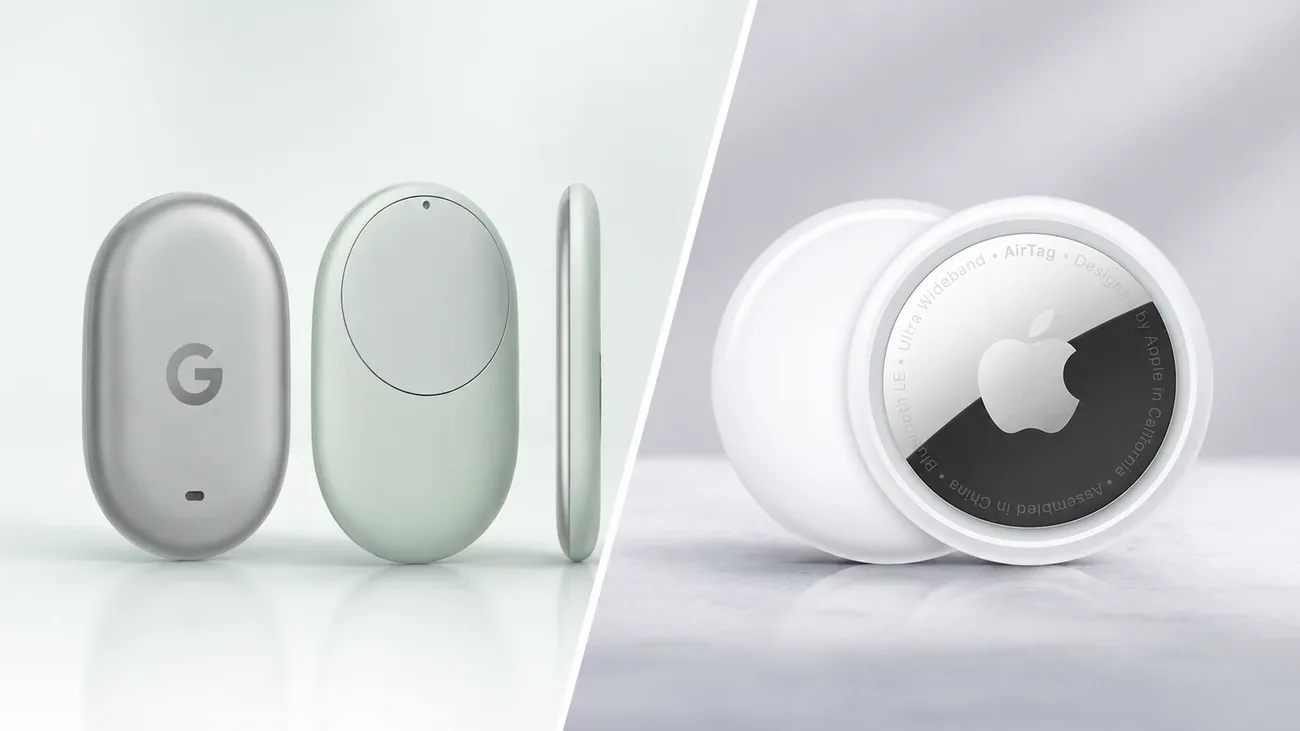
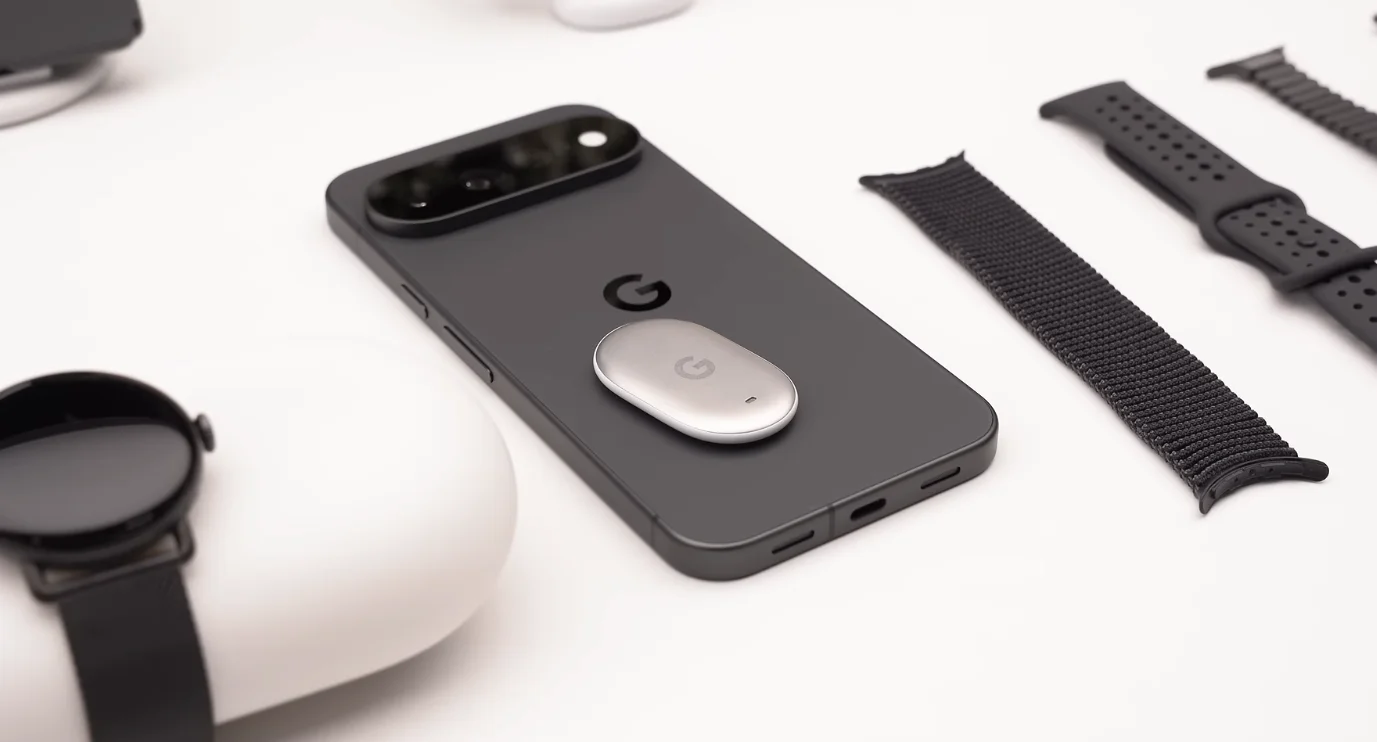
The shapes differ. AirTag is a round disc, 31.9 mm across and 8 mm thick, and it still needs a holder to attach to keys. Pixel Tag is a thin rounded rectangle at 46.1 by 28 by 5.4 mm, weighing 11.8 grams with its battery, and it ships in a single Light Fog color. It has no integrated keyring hole either, so a holder remains part of its real cost.
The thinner body suits a bag pocket or a roomy wallet better, while AirTag has the smaller footprint but more thickness. Neither replaces a proper card-shaped tracker for a truly slim wallet.
Finder networks: Find My vs Find Hub
AirTag broadcasts Bluetooth identifiers that nearby Apple devices relay through Find My. Pixel Tag does the Android equivalent through Find Hub, Google’s encrypted crowdsourced network. CNET calls it the Bluetooth tracker that Android’s Find Hub network has been missing, and both systems are designed so the owner sees a location without learning whose phone helped relay it.
Network size is not a promise of an instant dot on the map. A tag still needs a participating device to pass within Bluetooth range, so an airport, station, or city street gives either system more chances than a quiet trail or an empty parking lot. Neither tag has a cellular connection, so neither can create an update where no nearby phones exist.
Apple describes Find My as a global network of more than a billion Apple devices, and Google makes the equivalent claim for Find Hub across Android. For an everyday owner, the phone in the pocket matters more than crowning one network universally better. It is the account and phone compatibility that decide whether you can set the tracker up, ring it, share it, and read its map.
Precision finding near the object
Both tags do more than display a last-known place. When phone and tracker are close, Ultra Wideband can provide distance and directional guidance. AirTag calls this Precision Finding, and CNET notes Pixel Tag matches it with pinpoint precision finding powered by ultrawideband. Pixel Tag additionally supports Bluetooth Channel Sounding, which ZDNet describes as promising more stable, accurate, and secure tracking.
The qualifier matters: the phone needs compatible radio hardware too. Google documents UWB support for newer Pixel Pro phones, selected Samsung Galaxy Plus and Ultra phones, and certain Motorola models. On an Android phone without UWB, Pixel Tag still pairs, appears in Find Hub, and plays a sound, but it loses the most precise close-range guidance. Channel Sounding raises the bar further: How-To Geek reports it needs Android 16 and Bluetooth 6.0 connectivity.
Apple’s current AirTag has a second-generation Ultra Wideband chip, which Apple says expands Precision Finding range by up to 50 percent over the earlier model. Pixel Tag’s UWB and Channel Sounding capabilities are announced specifications that look competitive, but head-to-head range claims should wait for retail testing in the same buildings and conditions.
Pixel Tag works both ways and shares wider
Pixel Tag has a physical button that can ring a connected phone, reversing the usual finder relationship. Tom’s Guide highlights this two-way tracking as the critical difference: an iPhone can trace an AirTag, but the AirTag cannot trace the iPhone back, while the Pixel Tag button finds the phone. If you lose your phone as often as your keys, this is a meaningful advantage, though not a reason to switch ecosystems on its own.
Sharing is the second Pixel Tag advantage. Google lets you share one tag with up to 10 people in the Find Hub app, double Apple’s limit of 5, which suits a household suitcase or a shared set of keys. AirTag answers with a mature, simple experience in Find My and Apple’s item-location sharing features.
The full spec sheet and compatibility details are in the Pixel Tag preview.
Travel, accessories, and first-year unknowns
Both trackers suit keys, bags, and checked luggage because their batteries are user-replaceable and need no paid cellular plan. The limits are shared too: the tag may go quiet while a plane is in the air, a remote location may have no participating phone nearby, and a location pin cannot make an airline deliver a bag. Use the information as evidence, then work through the carrier’s delayed-bag process.
Accessories deserve more attention than comparison tables give them. AirTag has an established market for keyrings, luggage holders, and card adapters after years on sale since 2021. Pixel Tag’s thinner shape needs its own holders, and that ecosystem only develops after the November retail launch. If you need a specific holder before a trip, availability can matter more than a minor radio difference.
Battery life and close-range behavior are pre-release claims at the time of writing. A year-long item finder needs time in actual bags, cars, and pockets before any publication can call the result independently verified. That is why an iPhone owner who needs a tracker now should not wait for Pixel Tag, and why an Android owner should treat the launch as a reason to wait rather than a product already reviewed. For the wider field, see AirTag vs Tile vs SmartTag vs Chipolo.
Privacy and unwanted-tracker alerts
Neither device should be treated as a covert people tracker. Apple and Google both take part in the industry standard for unwanted-tracker alerts. An iPhone or Android device can warn a person when an unknown compatible tracker seems to be moving with them, and that person can view the detection, make the tracker play a sound in range, and follow the manufacturer instructions to disable it.
These alerts protect people from misuse, but they do not detect a GPS device with its own cellular SIM. If an Android phone shows you a tracker warning, follow our Android unknown-tracker alert guide for the safe sequence. If the item is yours and you only need help finding it, a Bluetooth tag remains a good fit.
Which one should you buy
Choose AirTag if you own an iPhone or iPad. It is available now, costs $29, has a newer UWB chip, and slots naturally into Find My.
Choose Pixel Tag if you use Android and can wait for the November 11 release. It matches AirTag’s price and practical maintenance while adding a phone-finder button and wider item sharing.
The winner is not the tag with the longer feature list. It is the one your phone can own, your family can actually access, and your lost item meets often enough to report its location.
Frequently asked questions
Is Google Pixel Tag available now?
No. Google announced Pixel Tag on August 12, 2026, and TechCrunch reports sales begin on November 11, 2026, at $29 for one tag and $99 for a four-pack. The published specifications are enough to plan a purchase, but independent reviews of battery life, network behavior, and accessories must wait until retail hardware ships.
Which is better, AirTag or Pixel Tag?
The right choice follows your phone. AirTag needs an iPhone or iPad and uses Apple Find My, while Pixel Tag needs Android 9 or later and uses Google Find Hub. Both cost $29, use a replaceable CR2032 battery, and offer UWB precision finding on compatible phones. Buy the one your phone can set up, ring, share, and locate.
Can an Android phone use an AirTag?
No. An Android phone can receive safety alerts about an unknown AirTag traveling nearby, but it cannot set up, locate, ring, or share one as its owner. Those functions need an iPhone or iPad with Find My. Pixel Tag is the equivalent owner experience for Android users through Google Find Hub.
Does Pixel Tag work with every Android phone?
Basic pairing and Find Hub support need Android 9 or newer. Directional UWB precision finding needs compatible radio hardware in the phone too, which Google documents for newer Pixel Pro phones, selected Galaxy Plus and Ultra models, and some Motorola phones. Bluetooth Channel Sounding additionally needs Android 16 and Bluetooth 6.0, according to How-To Geek.
What does Pixel Tag do that AirTag cannot?
Two things stand out. Its physical button works in reverse, so the tag can ring a misplaced phone, while AirTag only works in one direction. Google also lets you share one Pixel Tag with up to 10 people in Find Hub, double Apple's limit of 5, which suits shared keys or a family suitcase. Both details come from Tom's Guide hands-on coverage.
Are these trackers good for tracking people?
No. Both are Bluetooth item finders, not live GPS trackers. Each updates its location only when a participating phone passes nearby, and modern phones warn about unknown trackers that move with someone. If you need frequent live updates with consent, use a GPS solution with its own cellular connection instead of a Bluetooth tag.